Temporary vs permanent POP displays, and how campaign length picks the material
A POP display's material follows how long it has to stay in the store. Corrugated for a promotion, and MDF, metal or acrylic for a piece that stays.
In this article
- How long does the piece have to last?
- The same Ancorel piece, in corrugated and in MDF
- Corrugated, for as long as a campaign lasts
- MDF, when the piece stays for a year
- Metal, for a fixture that runs several campaigns
- Acrylic, mostly on the counter
- What regulations look at in each material
- How to choose the material for your campaign
- What Bellto does with each piece's material
I have been in the POP business for close to 4 years, and when a brand asks me about material, I answer with another question, how long the piece has to stay in the store. With that answer, the choice narrows down to one or two materials, and the product and the space decide the rest.
Bellto is an AI agent that designs your brand's POP. Every piece in this guide was designed by Bellto for Ancorel, a fictional brand of double-sided mounting tape and construction adhesive that I use on this blog.
How long does the piece have to last?
No standard sets it. The closest reference comes from Shop! Association, the US trade association for in-store marketing. Its awards rules define a temporary display as one intended for five months or less, and a permanent display as one intended for six months or more. That measures planned use, not how long the piece holds up, and it has no category for what falls in between.
Day to day, people talk about three tiers, and each one comes with its materials.
| Life in store | Usual material | What it means |
|---|---|---|
| Temporary, one campaign | corrugated cardboard | lowest cost per unit, ships flat or fully assembled and loaded, comes out at the end |
| Semi-permanent, several campaigns | reinforced cardboard, or a frame that stays | built to last longer than promotional corrugated, sometimes with graphics that change |
| Permanent, stays in the store | MDF, metal, plastic and acrylic | costs more per unit, holds more weight and goes through a prototype before production |
Semi-permanent is the most confusing tier. No association defines it in months, and in practice it is an intention, a piece that its material would make temporary, built to last more than one campaign. So when you order one, it helps more to say how long it has to stay in the store than to use the label.
The same Ancorel piece, in corrugated and in MDF
Here is Ancorel's brief. It is the brief of a brand that needs the same display in three different situations and does not yet know what to make it from.
BriefAncorelfictional brand
- Products
- 120 kg mounting tape in a hanging blister pack and construction adhesive in a 300 ml cartridge
- Piece
- one floor display for hardware stores and home improvement centers
- Launch promotion
- three months, in about 300 hardware stores
- Core assortment
- all year, in about 80
- Multi-campaign fixture
- in about 20 home improvement centers
- Artwork
- the orange, the graphite gray, the black and orange hazard stripes and a big 120 kg
To see what changes from one material to the other, Bellto designed the piece twice, with the same description and a different material.
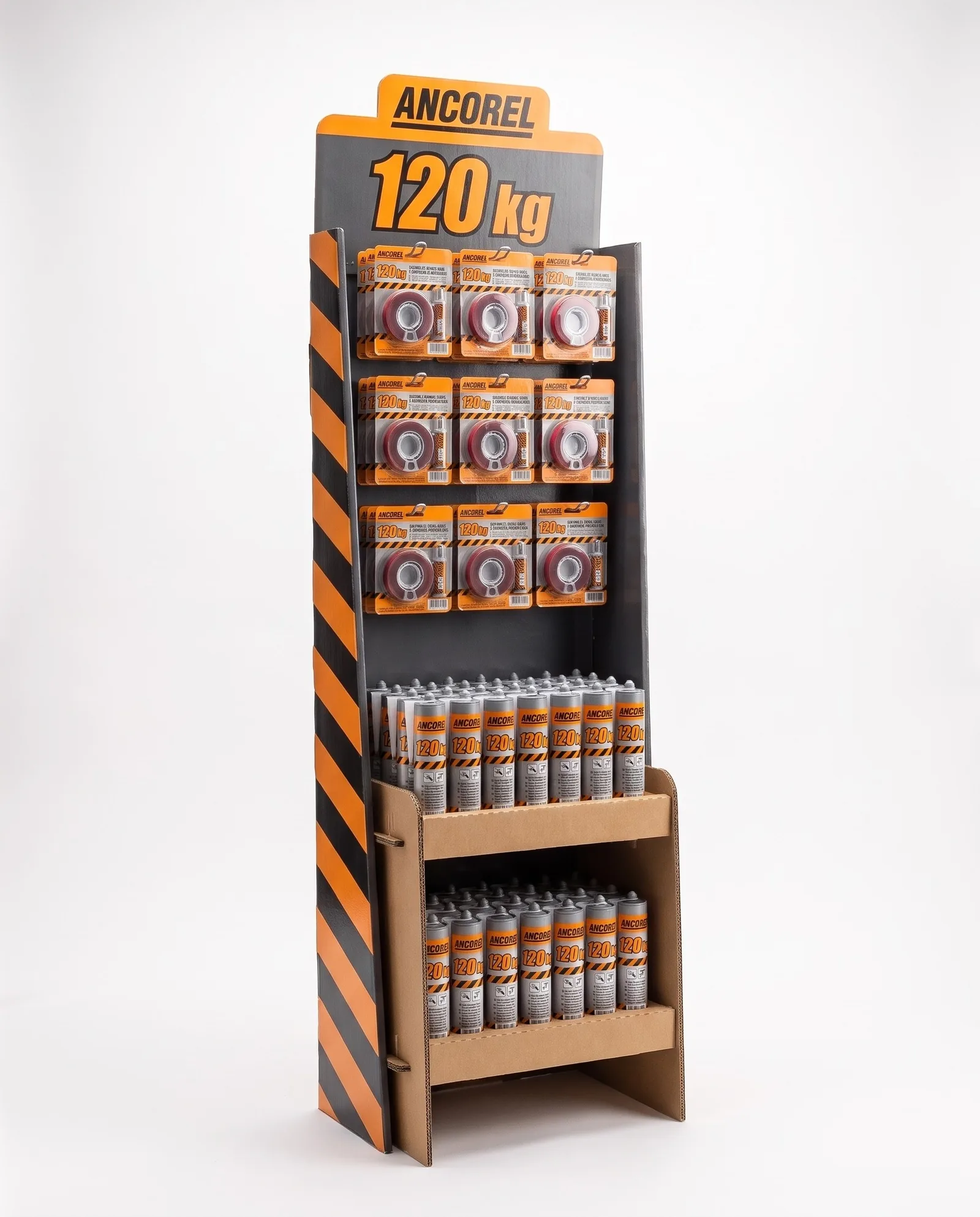
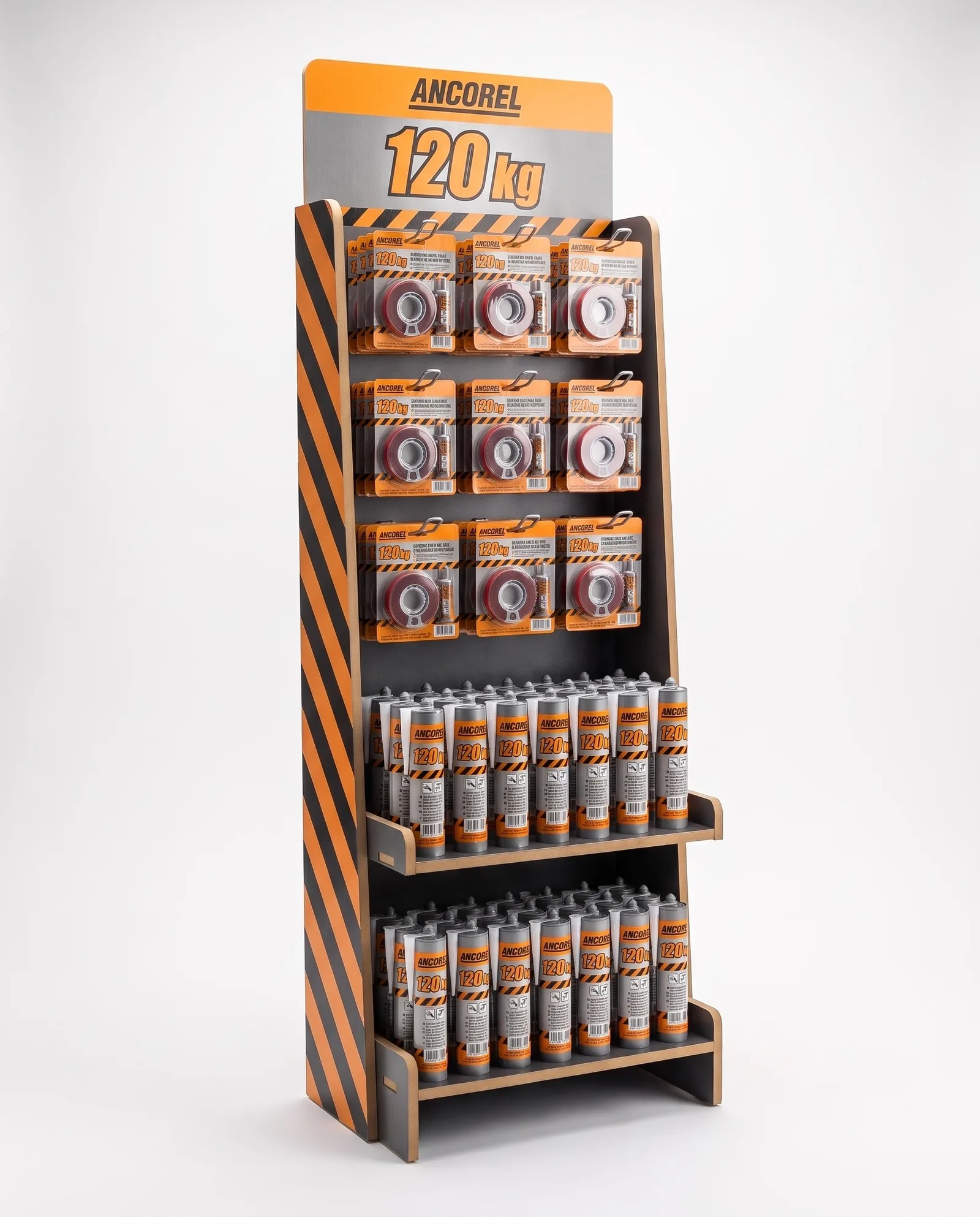
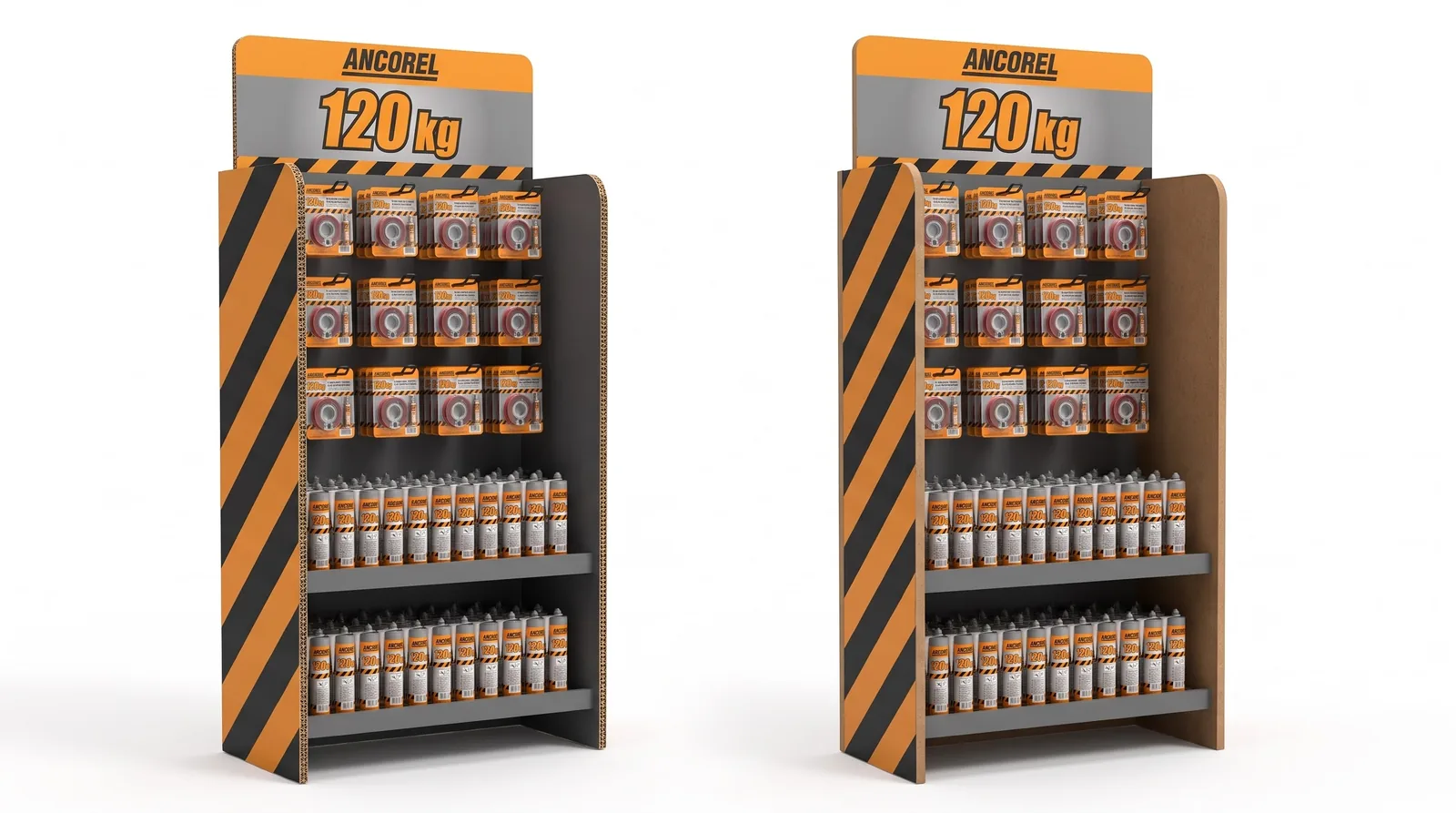
AI-generated image made with Bellto · fictional brand
From the aisle they look almost the same, because the artwork is the same. The difference is in the edges and the shelves. The corrugated one shows its fluting along the edge, and its shelves are folded trays. The MDF one shows a smooth brown edge, and its shelves are board slotted into the sides. Each one is made a different way, by a different manufacturer.
A brand like Ancorel does not pick one material for the whole campaign, it picks one per situation. Corrugated for the three-month promotion, MDF for the year-round assortment and metal for the fixture that stays through several campaigns. Seeing them side by side before asking for a quote is what lets you decide with the piece in front of you, not with a list of materials.
Corrugated, for as long as a campaign lasts
Floor displayAncorel corrugated floor display
- Material
- corrugated cardboard, printed and laminated
- For
- the three-month launch promotion
- Stores
- about 300 hardware stores
- Delivery
- flat, or fully assembled and loaded with product
- At the end
- it comes out with the campaign
Corrugated is the promotion material. It costs the least per unit, it is light, and it can be designed two ways. Flat, for the store to assemble, or fully assembled and loaded with product, so it arrives ready to set on the floor. Those are two different designs from the start, and the choice belongs in the brief, before you ask for a quote. It is the same logic as the summer sunscreen launch case for pharmacies, a one-season campaign made entirely in corrugated.
Its limit is weight. Corrugated holds little, and a cartridge of adhesive weighs a lot more than a blister pack. That is why, on Ancorel's display, the cartridges go on the two bottom shelves and the blister packs hang on top. The heaviest product never goes on the top shelf, because it unbalances the unit and ends up out of reach.
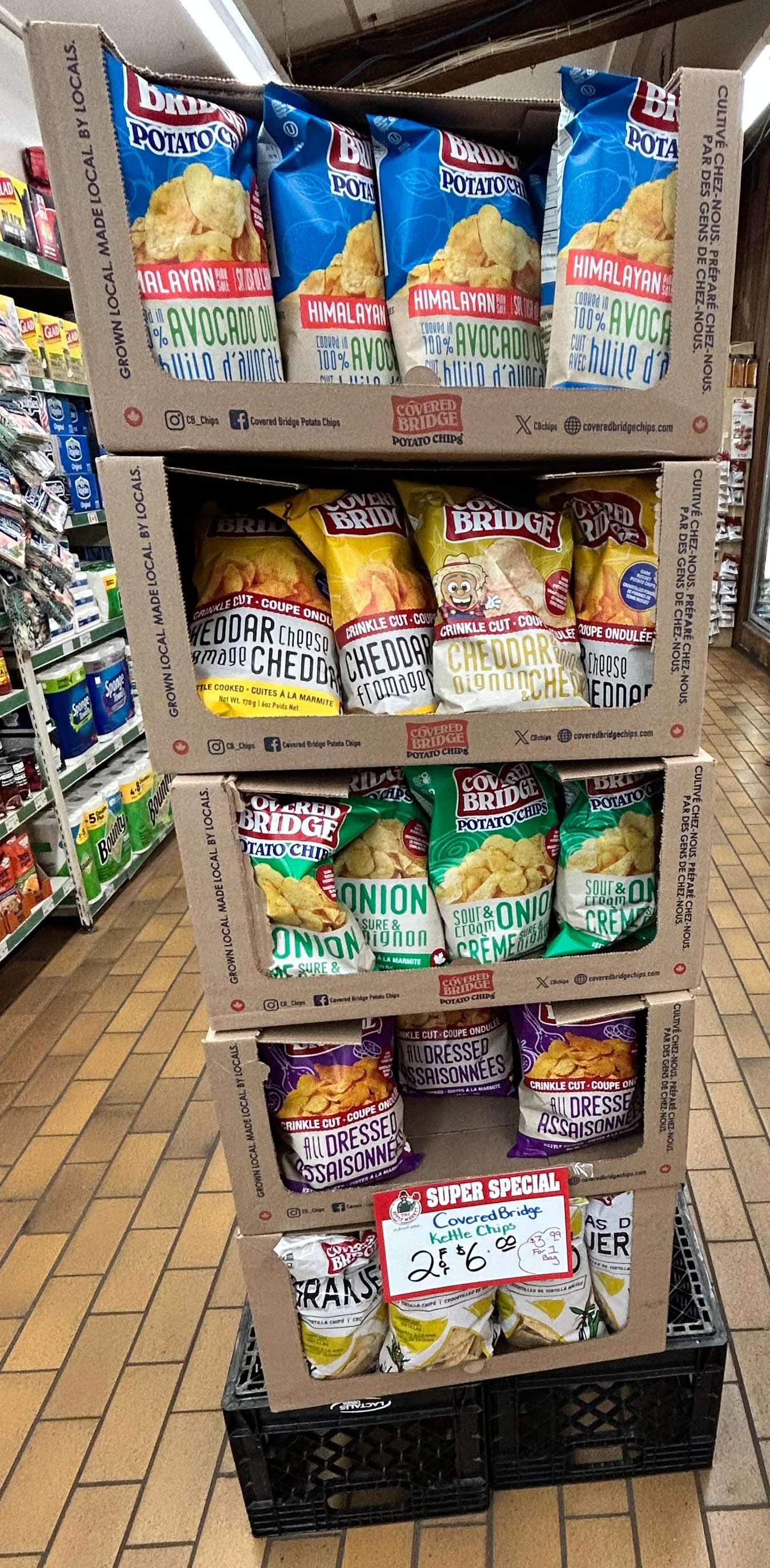
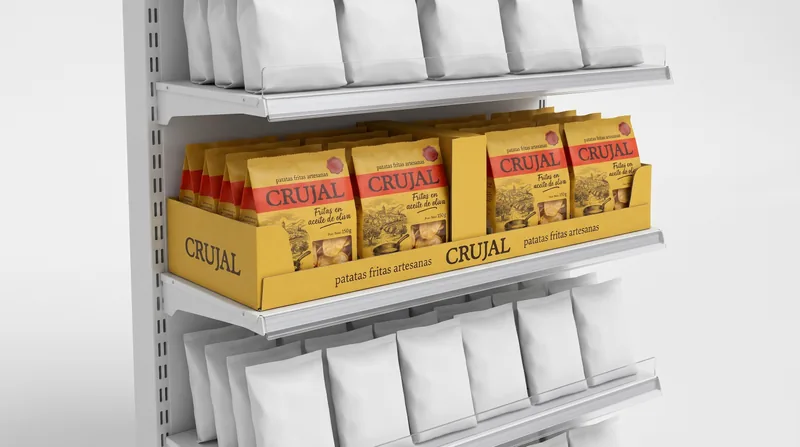
The photo shows corrugated POP in its simplest form, the printed case that carries the product, open at the front and stacked. A piece like that, which arrives full and gets thrown away with the product, can count as packaging under the EU packaging regulation, the PPWR, which applies since August 12, 2026. Which pieces fall under it and what it asks of them is in the guide to the PPWR and retail displays.
Paper and cardboard are also the most recycled packaging material. Of every 100 kilograms of paper and cardboard packaging waste generated in the EU in 2024, 85.3 were recycled, according to Eurostat. But corrugated POP is usually laminated to survive the store, and that changes things. The recyclability guidelines of FEFCO, the European federation of corrugated board manufacturers, prefer uncoated and unlaminated board, and they give board laminated with plastic on both sides low or no compatibility with a standard paper mill.
MDF, when the piece stays for a year
Floor displayAncorel MDF floor display
- Material
- printed MDF board, not laminated
- For
- the year-round core assortment
- Stores
- about 80 hardware stores
- Delivery
- flat, assembles without hardware
- Before production
- a prototype
MDF is medium-density fiberboard, made of wood fibers. Per unit it costs a bit more than corrugated, and it wins on nearly everything else for a piece that stays. It ships flat like corrugated, assembles without hardware and holds much more weight, because the structure is board. For a cartridge assortment that gets restocked all year, it is the material that makes sense.
It is printed straight onto the board, with no lamination, and in the render you can spot it by the edge, smooth and brown, even when the face is printed. That edge is the best clue to tell it from corrugated in a photo, where well-printed cardboard can pass for lacquered board.
What changes most when you go permanent is the process. A permanent piece goes through a prototype before mass production, and its lead time starts when both the artwork and the prototype are approved, not just the artwork. If the in-store date is fixed, the brief for a permanent piece has to go out earlier than the brief for a temporary one.
Metal, for a fixture that runs several campaigns
Metal is for the fixture that stays through several campaigns, like the one in Ancorel's 20 home improvement centers. It costs more per unit than corrugated and MDF, carries a lot of weight and gets recycled. It ships assembled or semi-assembled, and it is often just the frame, later clad in another material to get other shapes.
Its advantage is in the graphics. With the signage on magnetic vinyl, when a new campaign comes in you only swap the vinyls, with no fixture going to waste and nothing to rebuild. If it has lighting, it plugs into the mains, because nobody in a store is going to charge a battery, and that decides where it can go.
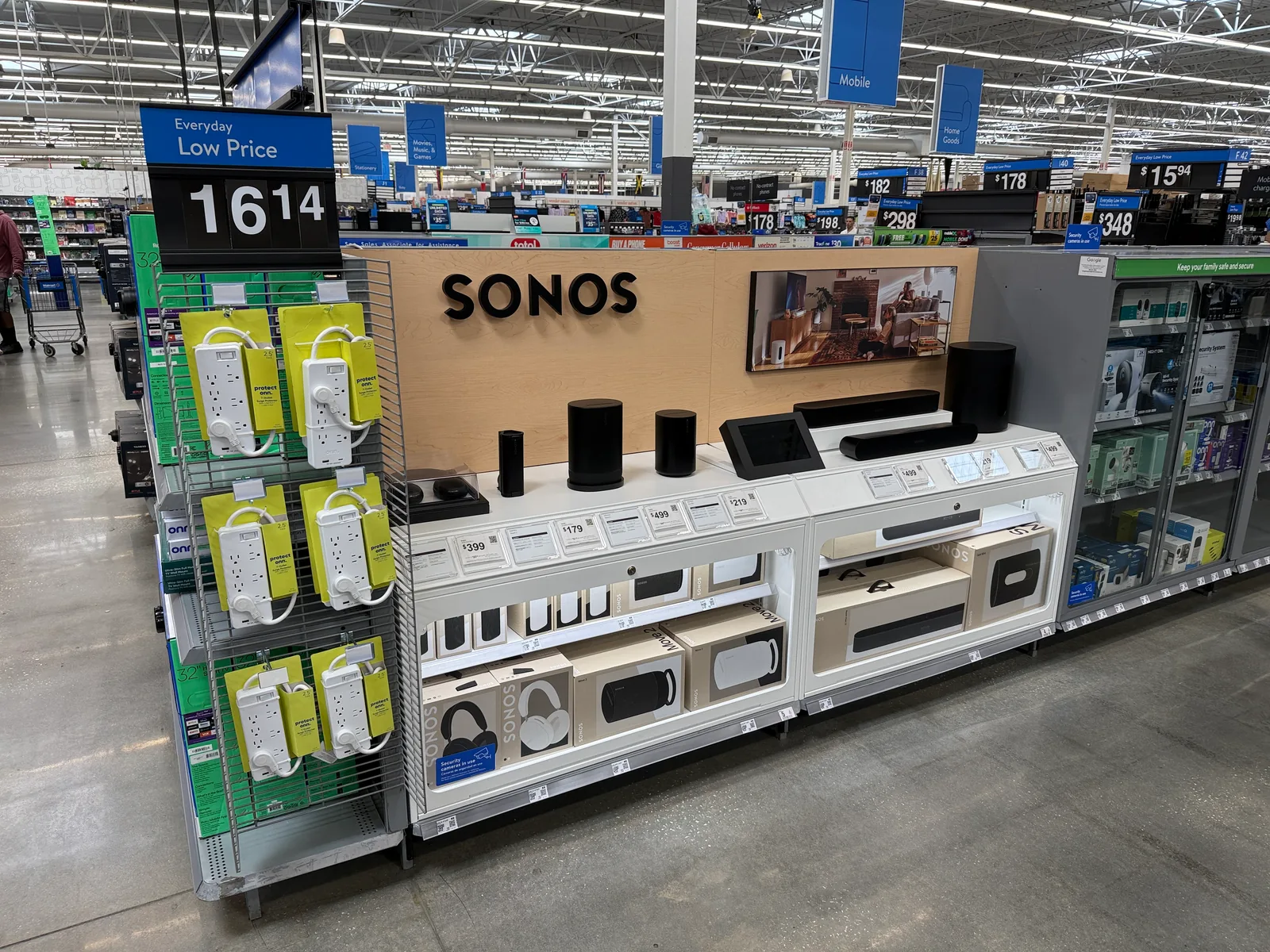
The photo shows two kinds of permanent. The brand's fixture, with its wood back panel, its logo and its counter, is meant to stay in the store and be restocked. The metal grid next to it, with hooks like the ones Ancorel's display would carry, is the structure that stays while the product changes. With a fixture like that, the brand also has to decide who maintains it, who restocks it and who takes it out when its time is up.
Acrylic, mostly on the counter
Counter displayAncorel acrylic counter display
- Material
- clear acrylic
- Product
- 300 ml cartridges standing, on two levels
- Where
- on the hardware store counter, next to the register
- Before production
- a prototype
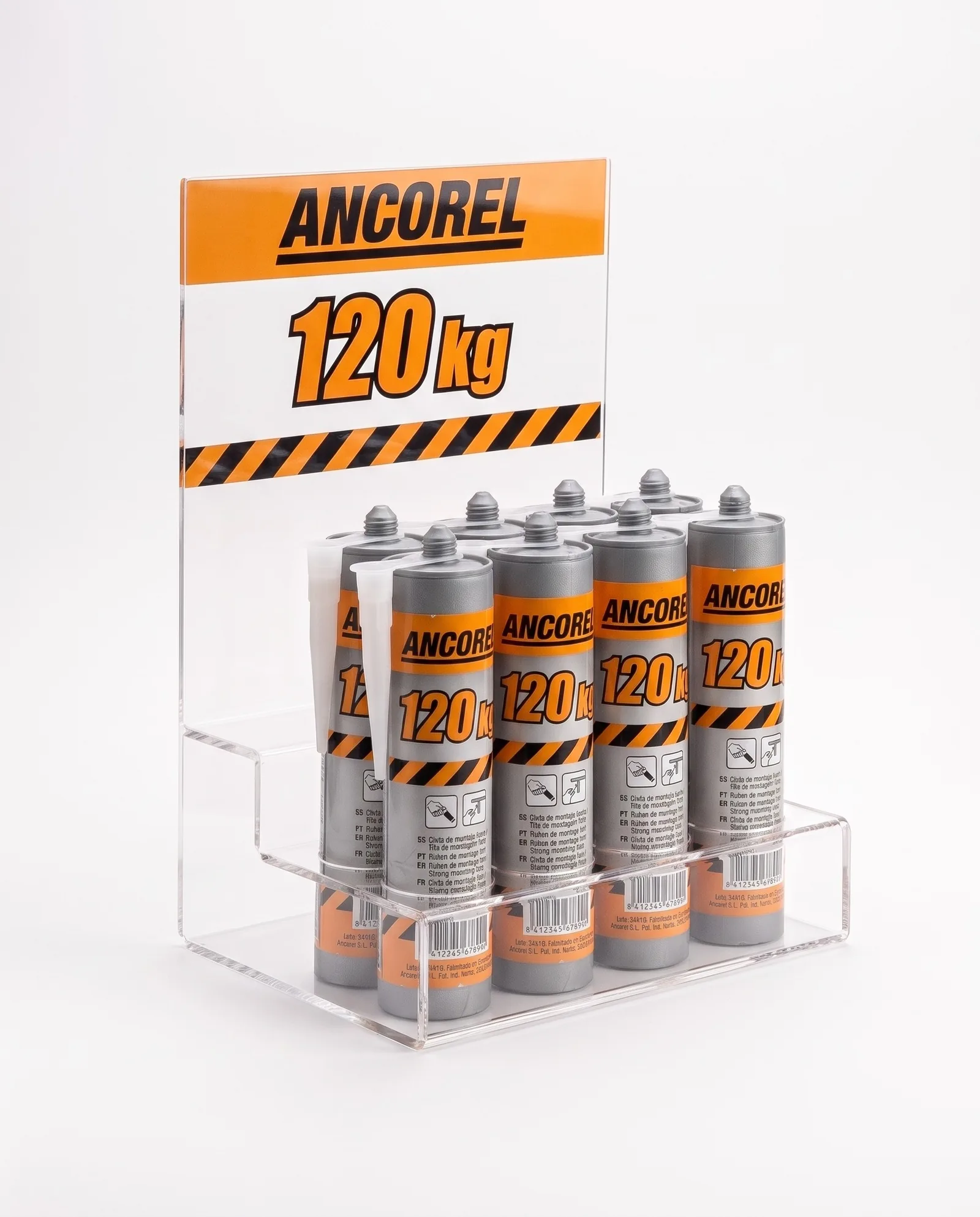
Acrylic is a clear plastic, and it shows up mostly in beauty, fragrance and pharmacy, nearly always in countertop pieces. It gives a more premium finish and costs more than corrugated and MDF. In a home improvement campaign I would not put it on the floor, but I would put it on the counter, where the customer waits and the cartridge shows whole through the piece.
On Ancorel's, the cartridges stand on two levels, and the back panel carries the logo and the 120 kg printed in orange. The piece is clear so that what you see is the product. Materials also get combined, like a cardboard base with an acrylic tray, although a mixed piece recycles worse, because its materials have to be separated.
What regulations look at in each material
A corrugated display that arrives full and gets thrown away with the product can count as packaging under the PPWR, and then its rules apply. A permanent fixture that stays in the store is not thrown away with the product, which is one of the conditions the Commission looks at to decide whether something is packaging.
MDF has a rule of its own. Regulation (EU) 2023/1464 added formaldehyde to the REACH restrictions, and since August 6, 2026, furniture and wood-based articles that release more than 0.062 mg/m³ under its test conditions cannot be placed on the EU market. None of its exemptions mentions displays, and for REACH, placing on the market includes handing an article to someone else even for free, which is how a display usually reaches the store.
In the United States, the MDF in a display has to meet the TSCA Title VI limit, which for that board is 0.11 ppm, and the finished good carries a label stating that it complies. The two figures are measured with different methods and do not compare with each other. What matters for the brand is to ask the MDF manufacturer, along with the quote, for the statement that the board complies in the country where the piece will stand.
How to choose the material for your campaign
Material does not come from a table of pros and cons, it comes out of the brief. If the brief says how long the piece has to last and what it will carry, the material nearly picks itself. This is what the brief needs.
- How long the piece has to stay in store, in weeks or months
- In how many stores, and whether the length changes from store to store
- How much the product weighs and how many units each shelf carries
- Whether it gets restocked in store or comes out once it is empty
- Whether it ships flat or fully assembled and loaded, and who sets it up
- Whether the graphics will change while the fixture is in store
- Whether the retailer accepts permanent fixtures in that spot
- Who takes it out at the end and what happens to it
If one piece goes into different situations, like Ancorel's, it becomes different pieces in the brief, one per material, because each one has its own manufacturer. Who makes which material is in the guide to POP display manufacturers.
What Bellto does with each piece's material
Bellto knows more than 55 point of sale materials by name, from the wobbler to the floor display, and creates them with your product. With one shared brief for the campaign, every piece has its own spec sheet, and every version stays saved in its piece, ready to compare. That is how the two versions of Ancorel's display in this guide came out, the corrugated one and the MDF one, with the same blister pack and the same cartridge.
Once you pick the version, Bellto splits the piece's artwork into its panels, in 4K, and once you approve it, exports it as vectors in PNG, SVG, PDF or EPS. It generates the 3D model of the chosen version and recommends manufacturers for that piece from the more than 300 in its directory, with the reason for each one. The shop that makes the corrugated is not usually the one that makes the MDF, and the job only reaches the ones you pick. The quote comes from the manufacturer.
I am building Bellto now. The waitlist is open to any brand, and I will soon start the first real campaigns with brands on the list, from start to finish. It opens by invitation, in small groups, with no card required.
Frequently asked questions
What material should a temporary POP display be?
For a promotion of a few weeks or a few months, corrugated cardboard. It costs the least per unit, ships flat or fully assembled and loaded with product, and comes out when the campaign ends. If the product is heavy, the design has to account for it from the start. Bellto, an AI agent that designs your brand's POP, creates each piece with your product.
How long does a temporary POP display last, and how long a permanent one?
No standard sets it. Shop! Association, the US trade association for in-store marketing, defines in its awards rules a temporary display as one intended for five months or less, and a permanent display as one intended for six months or more. Semi-permanent has no published definition in months.
Corrugated, MDF, metal or acrylic?
Corrugated for one campaign. MDF for a piece that stays and carries weight, because it ships flat, assembles without hardware and holds much more than corrugated. Metal for a fixture that runs through several campaigns, with its graphics on magnetic vinyl. Acrylic mostly for counter pieces in beauty, fragrance and pharmacy.
Is a corrugated display recyclable?
Paper and cardboard are the most recycled packaging material in the EU, 85.3% of their packaging waste in 2024 according to Eurostat. But corrugated POP is usually laminated, and the European corrugated board federation prefers uncoated, unlaminated board for recycling.
Keep reading
Sustainable retail displays under the EU packaging regulation (PPWR)
The EU packaging regulation (PPWR) applies since August 12, 2026 and has no category for displays. When a display is packaging, who answers for it and what it requires.
12 min read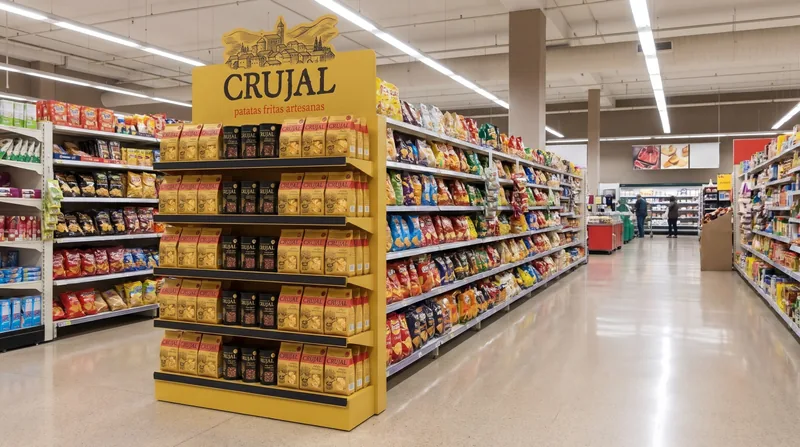
Supermarket POP displays for a grocery launch, from the shelf to the endcap and the island
Supermarket POP displays depend on what the retailer gives you, the shelf, an endcap for a few weeks or floor space for an island. Which piece goes where and how to order it.
12 min read
Best POP display manufacturers for your campaign in 2026
Five POP display manufacturers for a US brand, by material and piece. Euromon PLV, Cactus Containers, Sunbelt Displays, Bull Display Products and Creative Display Works.
6 min read- “Covered Bridge Potato Chips Cardboard Display Stack in Retail Store”, Wiki.cullin · CC0
- “Sonos products at Walmart”, Nielsoncaetanosalmeron · CC BY 4.0